The price of aviation turbine fuel, or jet fuel, in Delhi was hiked by Rs 2,797.41 per kilolitre (kl), or 4.5 per cent, to Rs 65,005.59, according to Indian Oil Corp, the nation's largest oil firm.

State-owned oil firms on Tuesday hiked jet fuel by 5.5 per cent in sync with rise in global rates.

IndiGo operates 125 flights across 17 destinations with a fleet of 19 brand new Airbus A-320 aircraft. For the full service carrier, Kingfisher, the drop on flights up to 750 km will be Rs 400 to Rs 1,950 from Rs 2,350 earlier. Fares for travelling above 750 km will be down to Rs 2,700 from Rs 3,100.
On October 31, the government exempted jet fuel from 5 per cent import duty. Indian Oil, Bharat Petroleum and Hindustan Petroleum cut jet fuel or aviation turbine fuel price from November 1 in Delhi by Rs 9,429.87 per kl to Rs 47,017.93 per kl, in line with fall in international oil prices.
Airports levy charges such as FTC, infrastructure charge, and into-plane charges on sale of jet fuel. The levy is passed through to airlines, pushing up costs.

The state-owned oil firms on Wednesday hiked jet fuel prices by a huge 3.6 per cent to Rs 46,876.58 per kl, making it the fifth straight increase in rates since October when international crude oil prices started rising.

The company said the new model would be available for sale in sugarcane-producing Maharashtra, Uttar Pradesh and Karnataka, to begin with.

The price of aviation turbine fuel, or jet fuel, in Delhi was hiked by Rs 1,039.1 per kilolitre, or 1.7 per cent, to Rs 62,208.18, according to Indian Oil Corp, the nation's largest oil firm.
The price of non-subsidised cooking gas (LPG) was on cut by Rs 21 per cylinder and that of jet fuel (ATF) by a steep 3 per cent on the back of falling international oil rates.
FIA is a body of four established domestic private airlines -- Jet Airways, IndiGo, SpiceJet and GoAir.

State-owned oil firms on Tuesday cut jet fuel, or ATF, prices by 4 per cent, the first reduction in rates since July, on softening of international oil prices.
Meeting on Tuesday to decide on letting foreign airlines buy into domestic ones.
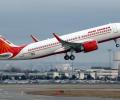
Air India will purchase 220 planes from Boeing for $34 billion, with an option to buy 70 more aircraft that could take the total transaction value to $45.9 billion, a deal that US President Joe Biden described as a "historic agreement". While announcing the Boeing-Air India deal on Tuesday, Biden also asserted that together with Prime Minister Narendra Modi, he was looking forward to deepen the ties between India and the US. As per an announcement from the White House, Boeing and Air India have reached an agreement under which the airline will purchase 190 B737 MAX, 20 B787, and 10 B777X for a total of 220 firm order valued at $34 billion at list price.
.jpg)
Observing that the prime reason for these losses was high fuel cost which constituted almost 40-50 per cent of an airline's total costs, Civil Aviation Minister Ajit Singh said the aviation turbine fuel (ATF) prices were high due to rising base price and "very high VAT imposed by state governments."

Average monthly GST collection rose from Rs 90,000 crore during the first year of its implementation -- 2017-2018 -- to Rs 1.68 trillion during 2023-2024, representing an 87 per cent rise.

Aircraft maker Airbus on Thursday announced awarding a contract to Indian company Dynamatic Technologies for manufacturing all the doors for its next-generation narrow body A220 planes, giving a boost to the 'Make in India' initiative. While financial details were not disclosed, Civil Aviation Minister Jyotiraditya Scindia said it is one of the single-largest export contracts for an Indian aerospace manufacturing company and emphasised that the country is becoming a destination for aircraft component manufacturing activities.
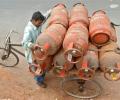
While jet fuel price was increased by Rs 2, subsidised LPG price has been hiked by Rs 4.50 per 14.2-kg cylinder. Non-subsidised LPG to cost Rs 93 more.

Analysts say this is a reflection of the high debt that most aviation companies have on their books. "Aviation companies are unable to pay their dues because they are into losses.

HPCL is Kingfisher Airline's largest aviation turbine fuel supplier.

The Directorate General of Civil Aviation (DGCA) on Tuesday suspended Air India's Boeing simulator facility in Mumbai after finding certain alleged lapses during a spot check, a DGCA official said. The pilots, who were scheduled to undergo refresher courses at the Mumbai facility, will now not be able to do so.
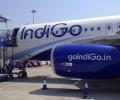
Despite the best ever quarterly net profit of Rs 3,091 crore during April-June of financial year 2023-24 (Q1FY24), challenges are mounting for InterGlobe Aviation-run IndiGo in the near term, said analysts. Given this, most brokerages have retained their ratings from 'buy to underperform', as well as their target price for the stock. For instance, Motilal Oswal Financial Services has retained its 'neutral' rating on the scrip as it believes the low-cost airline is facing teething issues at present.
The panel will be asked to give report by March-April next year.
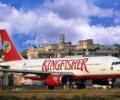
Mallya's airline is the second domestic carrier to have received DGFT approval for ATF import after budget carrier SpiceJet.

Indian carriers are expected to double their fleet size by 2020 to 1,000 aircraft by 2020, promising a huge opportunity for the maintenance, repair and overhaul business.
Domestic airlines may soon be able to hedge their risk of jet fuel prices. The government is considering a proposal to allow Indian carriers to hedge the price risk of aviation turbine fuel purchased from oil marketing companies in the country.
The government has cut the windfall profit tax on crude oil produced in the country while the levy on exports of diesel and ATF has been hiked, an official notification said. The tax, levied in the form of special additional excise duty or SAED, on domestically produced crude oil was reduced to Rs 6,700 per tonne from Rs 7,100 a tonne. SAED on the export of diesel was increased to Rs 6 per litre from Rs 5.50 a litre and on jet fuel or ATF to Rs 4 per litre from Rs 2, the notification said.
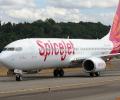
Reliance Industries Ltd is likely to import jet fuel for SpiceJet.
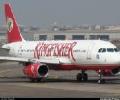
Seeking permission for direct import of jet fuel, Kingfisher Airlines has informed the government that steps are being taken to improve cash flow of the debt-ridden carrier by procuring ATF through suppliers' credit on lower interest rates.

'I think some of us, like Mukesh Ambani, myself and those of us who head industrial units, ought to really focus on what we can really do to make the world a safer place, maybe 50 or 100 years from now.' 'For instance, how can we deal with climate change and global warming, right now?' 'The effects of it may not be felt now; in fact, we may pay a price for it today, but it will help the generations to follow.'
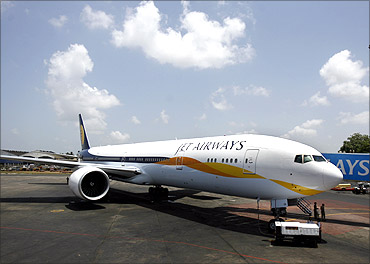
Jet fuel (ATF) rates were on slashed by a steep 12.5 per cent, the sixth straight reduction in prices since August, as international oil prices slumped to five-year low levels.
According to the formula being worked out, the company would raise the fuel charge by Rs 50 for every Rs 1,000-per-kilolitre increase in the rates of jet fuel. Inversely, there would be a slide in the fares by the same amount in case of a Rs 1,000-per-kl decrease.
ATF price in Delhi has been raised to Rs 53,309.30 per kilolitre from Rs 47,048.86 per kilolitre, an Indian Oil Corporation, the nation's largest fuel retailer, said. In Mumbai, the price rose by Rs 6,536.35 a kilolitre to Rs 55,191.58 per kilolitre.
The European Commission will propose scrapping tariffs on jet fuel imports starting January 1, an official said on Friday.
An airlines industry body has sought reduction in customs and excise duties on aviation turbine fuel and allowing private firms to supply it to bring down prices.
India must be prepared for a big, fat fuel import bill in FY23 - barring any further avatars of the Covid virus - as refiners crank up runs, or crude processing rates, to meet the growing demand for fuels, and crude prices soar. Capacity additions by an Indian state-run refiner will reinforce the need for foreign crude. Demand for all fuels is expected to increase by 3-8 per cent next fiscal from 2021-22, reaching pre-pandemic levels, according to analysts and industry experts.

Domestic jet fuel prices are up 7%, but are still 14% lower on a y-o-y basis. While lower fuel prices have brought respite to airlines, their non-fuel costs are rising because of rupee depreciation
The decision came following the intervention of Civil Aviation Minister Vayalar Ravi who met Petroleum Minister S Jaipal Reddy to sort out the issue.
ATF price in Delhi was reduced by Rs 4,765.5 per kilolitre (kl), or 11.9 per cent.

The disappointment of the year is government's failure in finalising the re-drafted aviation policy.
